Whether you're in a buyer's market or a seller's market, you need every advantage you can get to sell your home for the highest possible price. Staging is one of the few advantages that's almost entirely within your control.
Staging takes a home that buyers will accept and turns it into one that buyers desire. They see themselves living there — and they see their friends and family enjoying that new home with them.
Because a staged home has broader appeal, it tends to sell faster. A quicker sale increases the odds that more than one buyer falls in love with it at the same time, and competition between buyers is what can push an offer price higher.
Regardless of what kind of market you're in, staging is a wise investment of time — and it doesn't have to be an expensive one.

What the Data Says About Home Staging
Home staging has always had a strong reputation among agents and sellers, and the numbers back it up. According to the National Association of REALTORS®'s most recent research:
These figures come from the NAR 2025 Profile of Home Staging, based on a national survey of REALTORS®:
- 83% of buyers' agents said staging makes it easier for a buyer to picture a property as their future home.
- 29% of agents reported that staging led to a 1% to 10% increase in the dollar value buyers offered, compared to similar, unstaged homes.
- 49% of sellers' agents said staging reduced the amount of time a home spent on the market — 19% called the reduction significant.
- 86% of buyers' agents said staging affects at least some buyers' view of a home, and roughly a quarter said it affects most buyers.
The rooms that matter most also come through clearly in the data. Among buyers' agents, the living room is the single most important room to stage (37%), followed by the primary bedroom (34%) and the kitchen (23%). Guest bedrooms rank lowest at just 7% — useful to know if your time or budget is limited.
For a broader look at how staging affects offer price and time on market, HGTV's home-staging guide and Zillow's research on staging a house to sell are both worth a look. Just remember that HGTV and Zillow don't actually sell houses. They are advertising companies. Truly effective staging requires field-level experience and effective budgeting.
Additional Benefits of Staging
- Staging challenges you to present the home to the broadest segments of the buyer pool that will probably be looking at your home. That perspective alone helps you prepare the rest of the house.
- Staging encourages you to declutter and get organized. Every inch should be staged — even cabinets, drawers, closets, and pantries — to accentuate your storage and space.
- Staging increases the likelihood of a sale. When buyers can picture themselves living in a home, they're more likely to want it — and to feel they deserve it.
- Staging can reduce your Days on Market, which means you can focus sooner on your own next move.
- With reduced time on market, it's more likely your home sells at — or above — the list price.
- A well-staged home gets agents and buyers more engaged. The more agents and buyers who see it and leave with a strong first impression, the more likely they are to come back with an offer.
By the way, first impressions aren't limited to in-person visits. They happen just as often online — in photos, videos, and virtual tours on the real estate marketing sites where most buyers start looking. When a home shows well, more agents want to show it to their clients, and that increased traffic increases the number of people who might want to buy it.
Yes, staging can be a lot of work, and you don't have to do it alone. It can also be genuinely fun to see your home looking its best, dressed for success. Enjoy the process — here's how to tackle it, room by room.
Part 1: Curb Appeal — Exterior & Landscaping
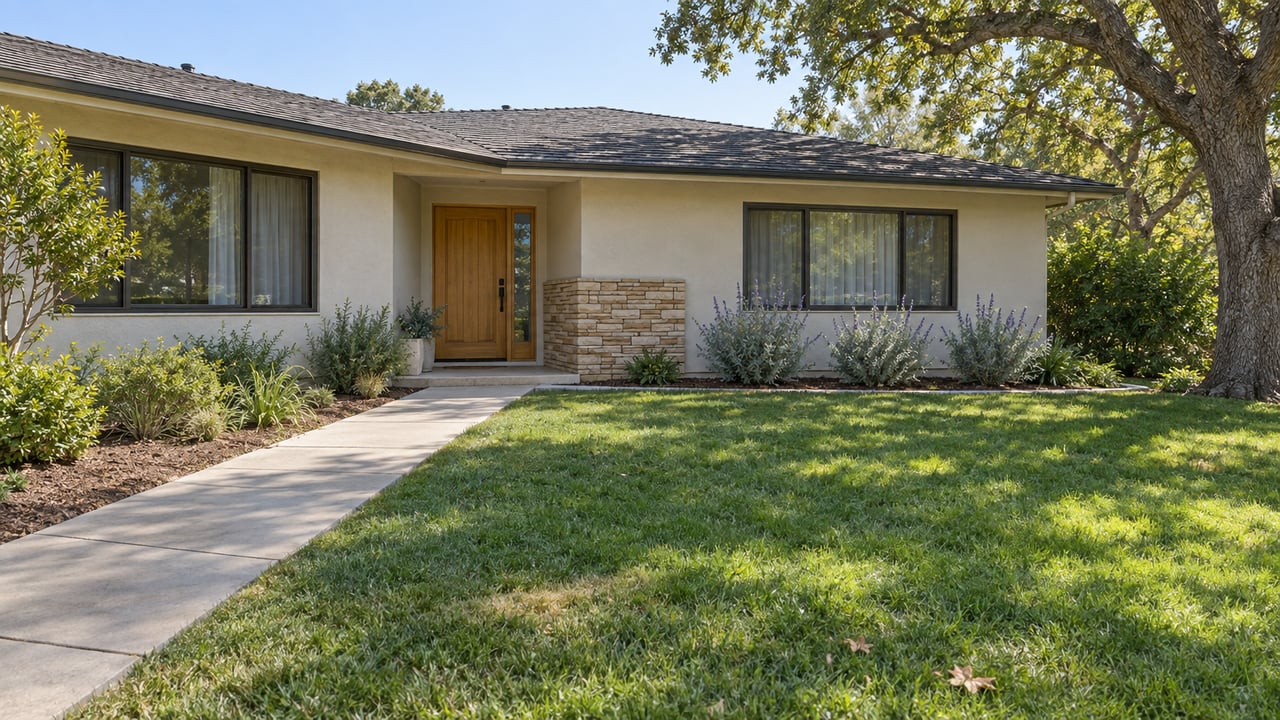
Staging begins on the outside. One of the most important moments in any sale comes when potential buyers pull up to the curb — you want them excited to get out of the car and come inside. Conversely, I have actually seen buyers come to a home that wanted to see based on a photo only to stay in the car once they saw the front up close and in-person.
Real estate agents consistently rank exterior condition as one of the biggest factors in a buyer's first impression; Kiplinger reports that nearly half of buyers in one industry poll named a shabby exterior as their biggest turnoff when touring a home.
Here are some general tips to generate 'curb appeal':
- Give the exterior a good power wash.
- Clean window screens and windows. (If screens are old or torn, you can take them off and store them. However, you must disclose to the Buyer their condition as soon as they make an offer) You don't want any 'negatives' to spoil the overall sparkling appearance of the home.
- Power wash the decks and concrete. At least, hose it off and sweep away any debris.
- Clean the gutters. Even if the Buyers cannot see they are dirty, the Home Inspector will probably note they need cleaning and this may indicate deferred maintenance.
- Trim trees and bushes away from the roof and windows, and make sure nothing blocks the view of the house.
- Clean up the flower beds and spread fresh mulch — a little bark can make a huge difference. Add spots of color with seasonal flowers.
- Cut the lawn and trim the edges.
Once it's all cleaned up, take a fresh look and see what still needs improving:
- Touch up any chipping paint on the exterior and trim.
Paint the front door a fresh color — it's like the necktie for your house. Zillow's research on front-door color has found that certain colors, like black or slate blue, are associated with meaningfully higher sale prices. Frankly, I have good results with brighter, 'happier' shades that contrast and compliment the outside house color.
- Add interest to the entry around the front door — make it welcoming without blocking the path in.
- Replace any broken fencing or railings.

Part 2: Site Appeal — Staging the Outdoors
Your outdoor living spaces should create a sense of serenity — an outdoor oasis. Stage conversation areas, such as a spot to enjoy morning coffee or a patio seating area for family dinners. The backyard should feel like a place to relax, gather with family, and entertain. Kid-friendly areas need to be in good repair, tidy, inviting, and safe.
Pools can be a positive or a negative. If you have one, pay special attention to maintenance, cleanliness, and seating around it. The goal is to show potential buyers what a great outdoor space they'll have to enjoy at any time of day.
Part 3: Staging the Entryway
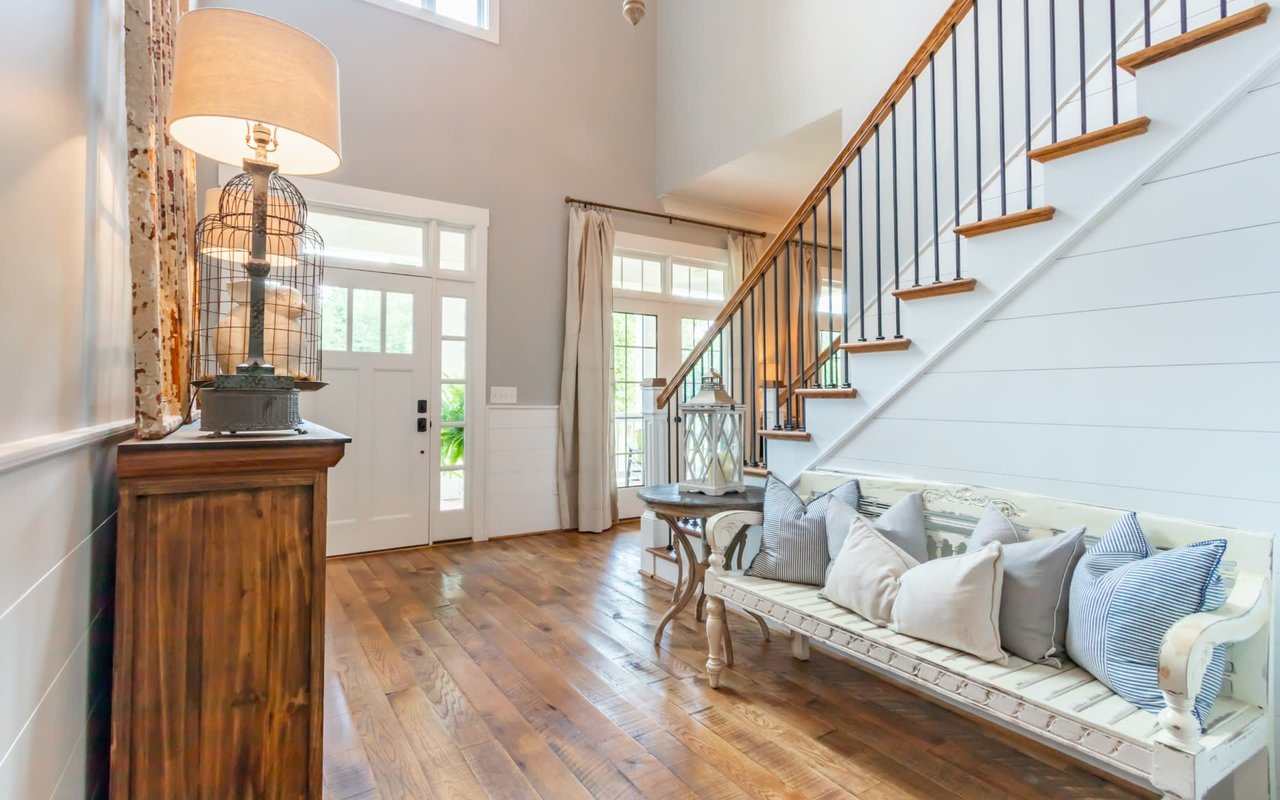
Now that you've wowed them with curb appeal and a spotless exterior, keep that first impression going with an inviting entry. As buyers open the front door and step inside, you want them to feel welcome. This is the feeling the new Buyers will want to convey to their friends and family when they come over! When I say 'the entry', this includes everything visitors see as they first approach the front door and then open it — this is where you set the mood for the rest of the viewing.
- Keep the entryway open and free of clutter. Minimal, well-positioned furniture gives visitors an obstacle-free entry that doesn't feel crowded.
- Pay close attention to the coat closet — (Pro Tip: Buyers almost always open it!). The appearance of ample storage starts here.
- Give the entry a clear purpose. Stage it in a way that tells the story of how buyers can use this space to welcome guests.
- Make sure it's well-lit and bright. If you have the space, add a fresh vase of flowers for a warm, colorful welcome.
- Replace any old, worn welcome mats outside, and add a new area rug inside.
Part 4: Staging the Living Room
Most people spend a lot of time in their living or family room, especially with children in the house. It's usually the entertainment hub of the home — sometimes including a TV. As buyers walk through, they should be able to picture spending family time there and entertaining their friends, too. Stage with that in mind.
De-personalize the room — family portraits and other memorabilia should come down. You want buyers to visualize it as their own space; we call that 'mentally moving in.' You don't want to break their train of thought by reminding them it's still someone else's home. Studies have shown that when people feel more comfortable in a home, they are more likely to want to buy it.
Arrange the furniture in a pattern that encourages conversation while keeping an easy traffic flow (this is very important!), so the room feels open and roomy. Put some thought into this one. It can pay off significantly in the end.
Freshen the walls with paint. A lot of people will want to simply 'touch up' the paint, and it rarely works as well as painting the whole room. This is really an opportunity to modernize the home. Neutral tones are preferable so any new owner's color scheme can be layered on top. There are plenty of warm neutrals that add visual interest without competing with a buyer's own taste — a professional painter is often a great source of ideas on color and tone. Zillow's staging guide recommends soft whites and grays for exactly this reason, but remember: colors come and go as far as style is concerned. As I said, "This is an opportunity!"
I heard someone say the other day, "If the furniture is a bit worn, consider using slipcovers as a low-cost way to refresh the look of your couch and chairs". Want a better idea? Move the furniture out and rent nicer-looking pieces.
Should You Hire a Professional Stager?
This is as good a place as any to raise the idea of using a professional stager. There are many to choose from, and we have arrangements with some of the best in the business. It comes at an extra cost, but it's often cheaper in the long run than buying and doing everything yourself — these professionals do this every day, with real success. The larger the home and the higher the asking price, the more this option pays for itself – in both time AND money!
Staging is really very specific to the home, price-range, and target demographic. Don't 'cheap out'. And don't assume that everyone likes the way you decorated for the needs and tastes of your family. Remember: you are selling your house, not trying to advocate for a particular style that may have already had its day.
Equally, adopt a mantra of 'Less in More'. If you have a mantle, keep it decluttered with just a couple of well-placed items — the mantle and fireplace are often the focal point of the room. If the TV is too large, it can distract from the fireplace as a feature; swap it for something smaller, or remove it entirely and let the fireplace be the star.
Optimize the natural light in the room. Replace heavy drapery with lighter sheers, and make sure blinds are clean — replace them if they're bent or broken. If you replace curtains, hang them wider than the windows to make the windows seem larger, and consider mounting them from ceiling to floor to draw the eye up and make ceilings feel taller.
Above all, keep the room airy and bright. Well-arranged furniture shows a buyer how their own furnishings might fit, while accentuating flow and spaciousness. When you notice people naturally wanting to sit down and stay a while, you've achieved your home-staging goal.
Part 5: The Kitchen
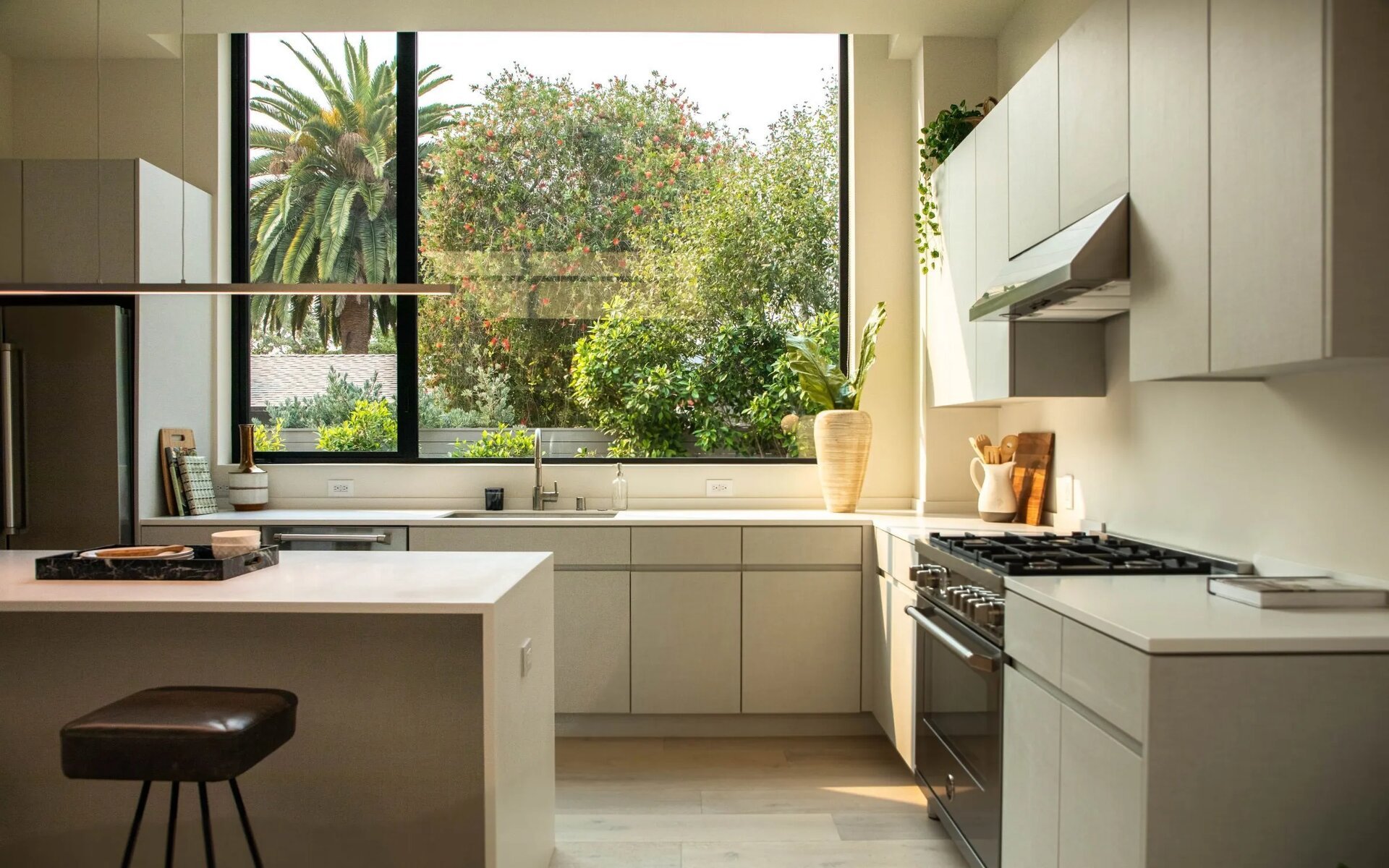
Kitchens don't need to top the priority list the way the living room does, but they still matter — 23% of buyers' agents named the kitchen among the most important rooms to stage, and it's one of the most commonly staged rooms among sellers' agents as well.
- Clear the counters down to just a few simple, coordinated accents — a bowl of fruit or a small plant goes a lot further than a countertop full of appliances.
- Deep clean everything, including the inside of the oven, refrigerator, and cabinets — buyers open them.
- Update hardware. New cabinet or drawer pulls are an inexpensive way to make dated cabinetry feel current.
- Absolutely remove magnets, notes, and personal photos from the refrigerator!
- Make sure lighting is bright and consistent — replace any burned-out or mismatched bulbs (Do I really have to say this?).
Small, inexpensive kitchen updates — not full remodels — can offer a better return. But again, don't let a broken cabinet door or a scratched sink go unattended. It will certainly not go un-noticed! HGTV's staging tips note that showing off existing storage well often does more for buyer perception than new appliances.
Part 6: The Primary Bedroom
The primary bedroom is the second-most important room to stage, according to buyers' agents — 34% named it a top priority, just behind the living room.
- Make the bed with simple, neutral, hotel-quality linens — this single step does more for the room than almost anything else.
- Clear nightstands and dressers down to one or two intentional items.
- Remove excess furniture so the room's true size and flow are easy to see.
- Tuck away personal items — medications, family photos, and anything overly personal — so buyers can picture the space as their own.
- Open the blinds or curtains to bring in natural light, and add a soft lamp for warmth.
- Please remember to get rid of any lingering smells – especially if the last occupant was a teenage child!
Part 7: Bathrooms
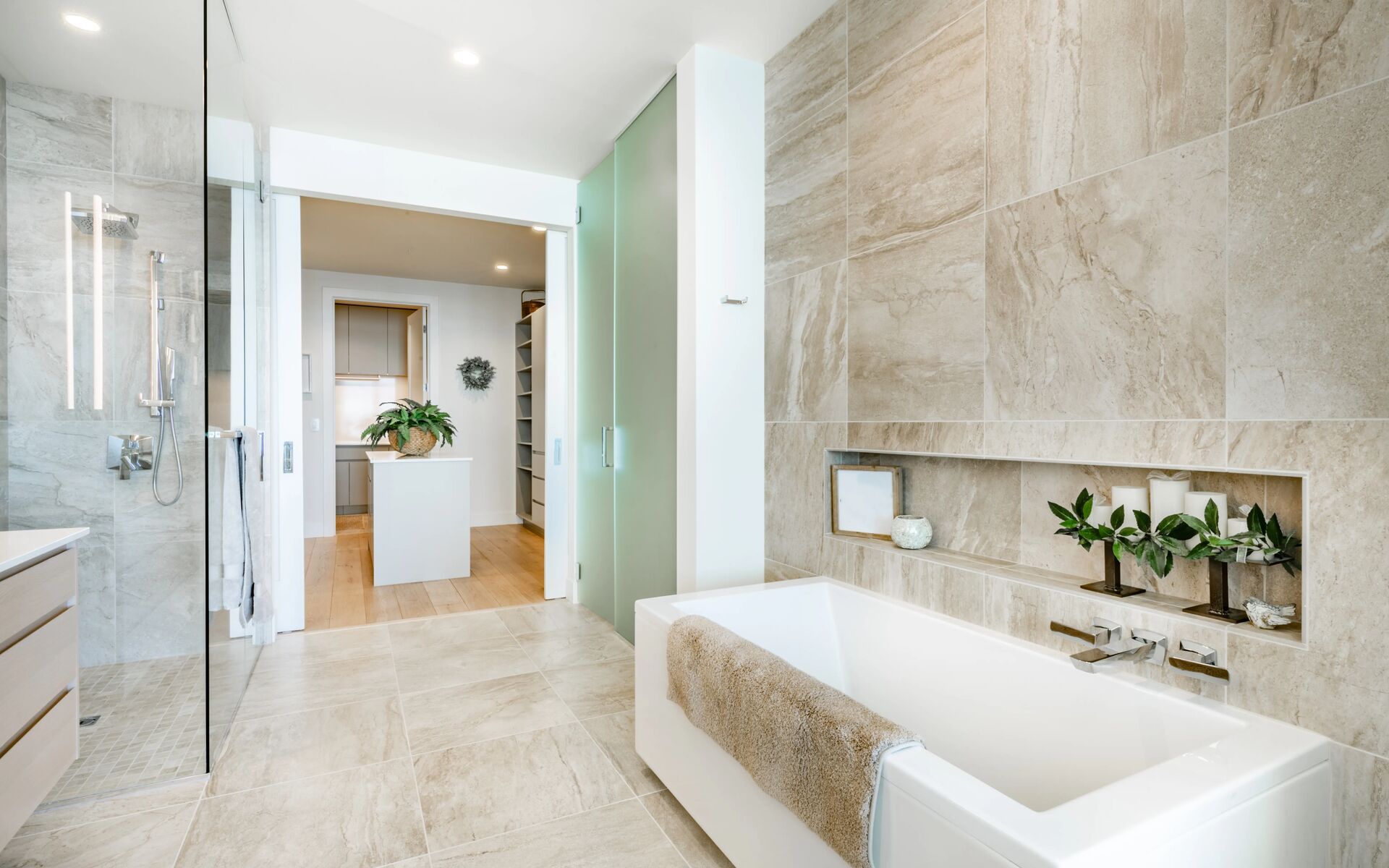
Bathrooms are one of the easiest rooms to stage cheaply, yet one of the most scrutinized by buyers. A spotless, neutral bathroom reassures buyers that the rest of the home has been well cared for.
- Replace old towels with fresh, matching, neutral-toned ones — rolled or neatly folded.
- Clear all personal care products from counters and shower ledges. No Axe Body Wash!
- Re-caulk and re-grout if there's any visible wear — a small fix that removes a big red flag.
- Add a simple bath mat, a small plant, or a scented candle for warmth without clutter.
- Make sure mirrors are spotless and lighting is bright and flattering.
- Do Not Forget The Baseboards!!
Part 8: The Dining Room
The dining room is one of the most commonly staged rooms among sellers' agents, and it's an easy space to make emotionally resonant — buyers picture holidays and family dinners here.
- Set the table simply — neutral place settings and a low centerpiece so sightlines across the table stay open.
- Remove leaves from the table if the room feels tight, so the space reads as roomy rather than crowded.
- Add a statement light fixture if the current one is dated — it's a relatively low-cost swap with high visual impact.
- If the dining room currently doubles as storage or a home office, clear it and let it be a dining room again.
Final Thoughts: A Small Investment With an Outsized Return
The decor you buy to stage your home is rarely wasted money — it makes the home more appealing while you're living in it, too, and if you genuinely love a piece, you can simply exclude it from the sale and bring it with you to your next home. Or rent it.
Turn on any popular home network on cable TV and you'll find a show built around staging. Rearrange the furniture, choose a soothing color palette, clear out the family photos, and your home is genuinely more likely to sell faster and for more money. It sounds too good to be true. It isn't — the soft, decorative side of staging is backed by hard data, room by room, from the curb to the primary bedroom.